
Customers need repeat access to bookings, orders, or account information.
Customer & business mobile applications
Plan and build mobile applications for customers and business teams. Operithm connects app UX, application development, backend APIs, authentication, and business integrations, with the platform and release scope agreed during discovery.
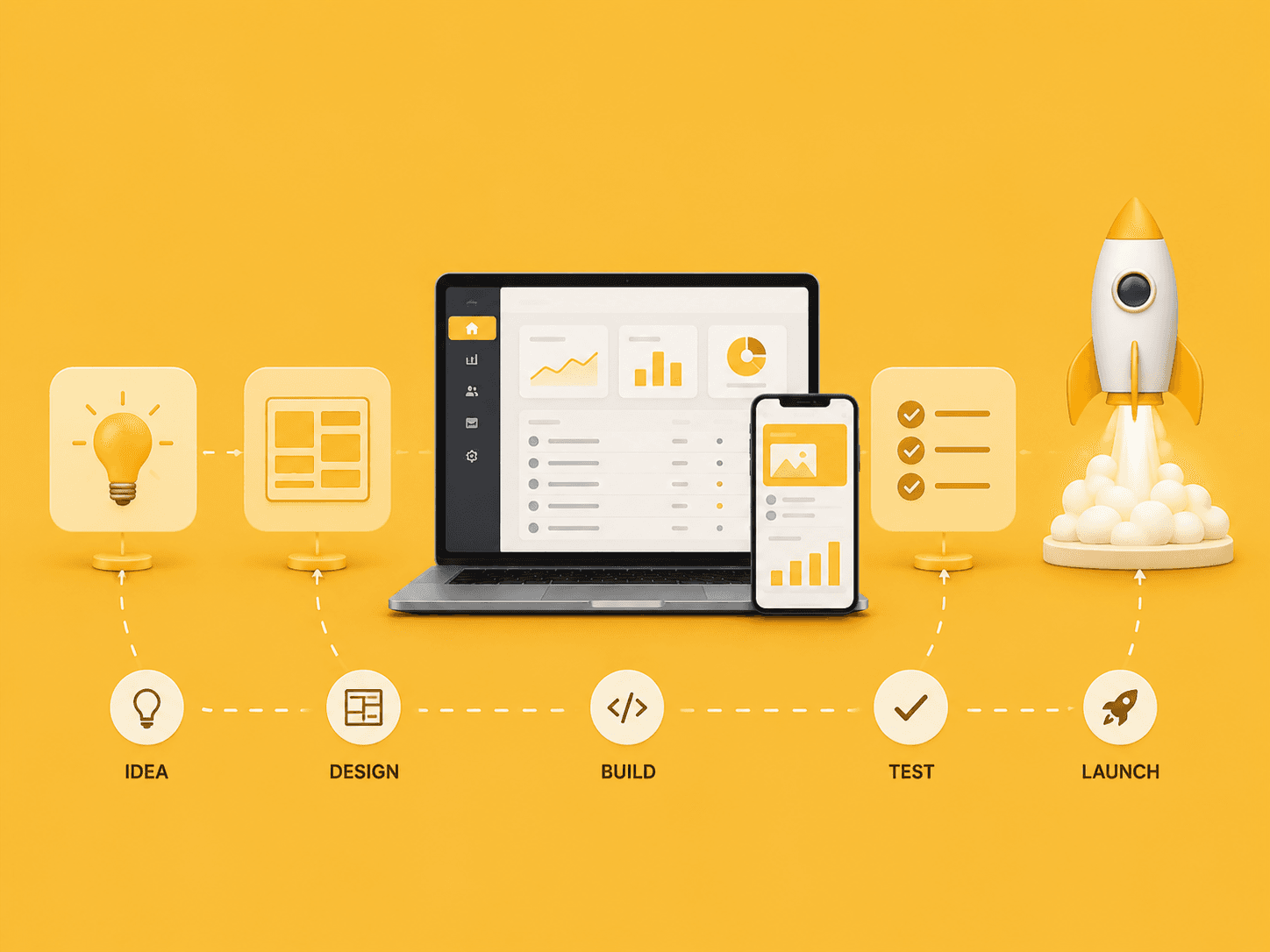
Where this service helps
A mobile app is useful when repeat usage, device features, notifications, or work away from a desk justify it. We help choose between a responsive website, progressive web app, and an app-store product.
Field teams need a focused interface away from a desk.
A service needs timely notifications and updates.
Users need camera, location, or other device features.
An existing web product needs a mobile companion.
An app idea needs a realistic first-release scope.
Who this is for
Founders, product teams, and businesses that need a customer application, internal product, or mobile experience.
A focused first release
Turn an idea into one complete user journey that can be evaluated with real users.
Customer self-service
Let customers manage bookings, accounts, submissions, or repeat tasks through an application.
An existing product extension
Add a new interface, feature, or integration after reviewing the existing code and infrastructure.
Service capabilities
01
Product discovery
Define users, primary tasks, platform requirements, and the smallest useful release.
02
Mobile UI/UX
Design navigation, touch interactions, onboarding, loading, empty, and error states.
03
Application development
Agree target iOS and Android coverage and the appropriate delivery approach before implementation.
04
Backend and accounts
APIs, authentication, permissions, data models, and administrative tools for the app.
05
Connected workflows
Integrate bookings, commerce, payments, notifications, and business records as required.
06
Release preparation
Device checks, release assets, account ownership, and deployment documentation within agreed scope.
What you receive
A defined delivery package, not an open-ended promise.
We agree the exact deliverables, acceptance criteria, and responsibilities in your proposal. A typical scope includes:
- 01Release scope, user flows, and acceptance criteria
- 02UI/UX designs with loading, empty, and error states
- 03Application, backend, and administrative features in scope
- 04Integration, device, and core-journey test checks
- 05Deployment and agreed source-code handover documentation
How we deliver
- 01
Define the release
Identify users, business value, unknowns, and the first complete journey.
- 02
Prototype and plan
Review UX, data, access rules, target devices, and integration dependencies.
- 03
Build in increments
Review working features and test them against the release acceptance criteria.
- 04
Prepare launch
Confirm environments, accounts, instrumentation, release assets, and operating responsibilities.
Tools and integration considerations
The technical approach follows your requirements, access, and operating model. Relevant components can include:
- Web and mobile interfaces
- Backend APIs
- Authentication
- Databases
- Deployment and monitoring
Build boundary
Agree the right foundation, project responsibilities, and operating requirements before implementation.
Platform
Choose web, progressive web app, or app-store distribution based on actual user requirements.
Dependencies
Document device permissions, third-party services, provider charges, and connectivity requirements.
Ownership
Agree source-code handover, app-store accounts, credentials, and backend ownership in the project scope.
Support
Plan operating-system updates, monitoring, and post-launch improvements as a separate ongoing scope.
Planning your project
Start with an audit or discovery where needed, agree an implementation scope, and add ongoing improvements or care when useful. Pricing and timing reflect the agreed work; third-party charges are identified separately.
What shapes the estimate
- First-release journeys and platform coverage
- Roles, data model, integrations, and real-time behavior
- Migration, device testing, and release requirements
Do we need an app or a mobile-friendly website?
That depends on repeat usage, device features, offline requirements, and distribution. We help compare a responsive web app, progressive web app, and app-store product before choosing a delivery approach.
What does a mobile app estimate include?
The scope should identify target platforms and devices, user journeys, backend APIs, integrations, testing, release preparation, and support. App-store accounts and third-party costs are agreed separately.
Can you work with our business outside the UK or Bangladesh?
Yes. We offer remote delivery worldwide, including North and South America, Europe, Asia, Africa, and Oceania. We agree meeting overlap, communication channels, and milestones around the project.
What should we prepare before requesting a proposal?
Share your business goal, intended users, current situation, required integrations, and timing. Budget context helps identify a practical first scope. A detailed technical specification is not required to start.
How are scope, handover, and ongoing support agreed?
The proposal identifies deliverables, assumptions, approval responsibilities, account and source ownership, and any ongoing costs. Support hours, maintenance, and future improvements are scoped explicitly.
Planning guide: Mobile app or responsive web app: what does your business need?
Connected capabilities
Worldwide service delivery
Based in the UK and Bangladesh.
Working with businesses worldwide.
We provide website, software, SEO, and AI automation services across North America, South America, Europe, Asia, Africa, and Oceania. Remote collaboration is planned around your team and project.
- North America
- South America
- Europe
- Asia
- Africa
- Oceania
Let's build your next step