
Frame
Define the result, users, consequence, owner, and reason to act.
A build process designed to reduce uncertainty
Speed comes from a bounded result, named owner, representative inputs, short decision loops, and release evidence - not from skipping discovery, edge cases, or handover.
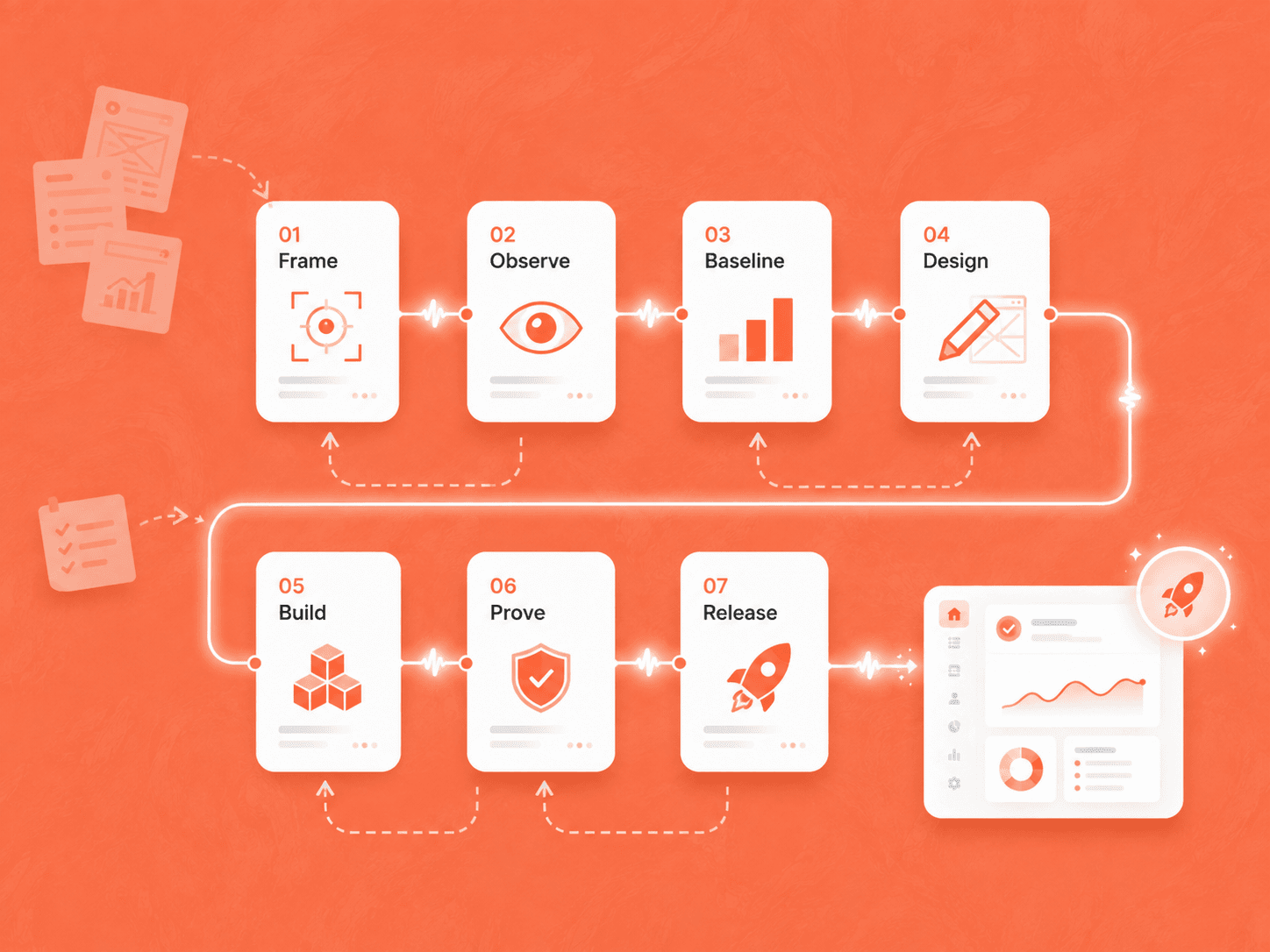
The seven stages
Define the result, users, consequence, owner, and reason to act.
Map the real workflow, tools, data, waiting, rework, and failure.
Agree how the current condition and future result will be observed.
Specify the target flow, data, rules, permissions, interface, and recovery.
Implement the smallest end-to-end path in reviewable increments.
Test representative, missing, duplicate, delayed, unauthorized, and vendor-failure cases.
Deploy, monitor, train, document, hand over, and choose the next improvement.
What we need from the client
Working rhythm
Handover packet
Architecture and workflow map, system inventory, ownership, setup, deployment, data and permissions, operator guide, test record, monitoring, recovery notes, known limitations, and recommended next decisions.
Let's build your next step