
For new ventures and early product teams
Turn a specific problem and advantage into a usable release while product strategy, UX, engineering, deployment, and launch evidence remain connected.
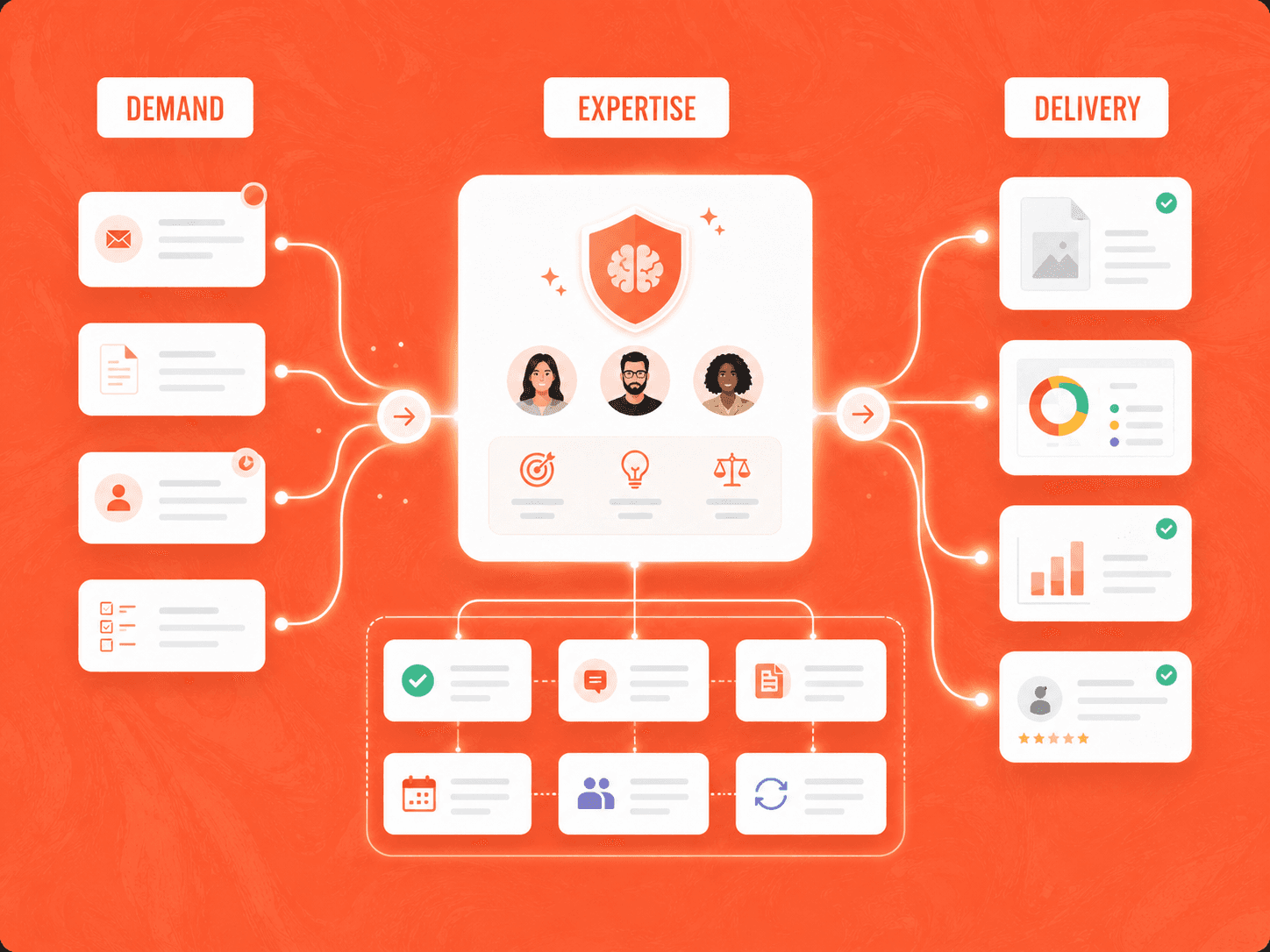
What can change
Digital capabilities for your customers and team.
- One clear user and job
- A credible alternative analysis
- A release boundary tied to risk or value
- A coherent data and permission model
- Usable core journeys and administration
- Instrumentation that answers the next product question
The operating change
Prevent feature accumulation, prototype confusion, AI-wrapper fragility, and the founder becoming the integration layer between disconnected contributors.
Relevant services
Start with the operational constraint, then connect, structure, automate, or productize only where the result requires it.
Custom web applications and SaaS products, from idea to launch.
Build a customer portal, dashboard, marketplace, or subscription product with Operithm. We connect product discovery, UI/UX design, frontend and backend development, integrations, and deployment in one delivery process.
Custom AI assistants and agents for real business workflows.
Operithm builds assistants that retrieve, compare, classify, draft, summarize, and take bounded actions inside real workflows. Every system defines sources, permissions, review, and escalation.
Connect your business tools. Keep your data in sync.
Operithm builds API integrations and data workflows between CRMs, ERP systems, online stores, payments, accounting, and operational tools. Validation, duplicate handling, monitoring, and recovery are part of the connection.
Let's build your next step