
The same record is maintained in more than one tool.
Custom ERP, CRM & business software
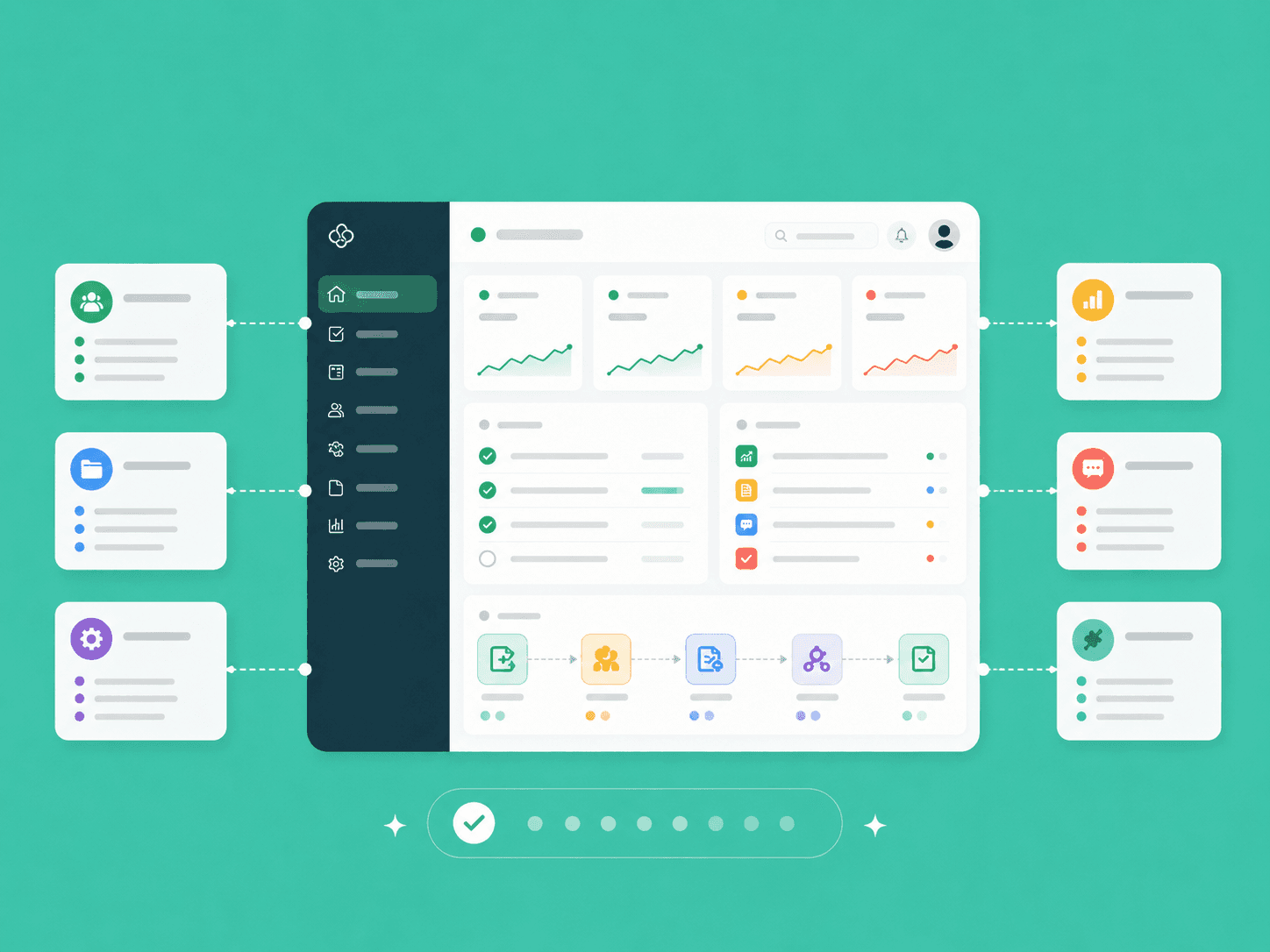
Bring sales, inventory, purchasing, approvals, and reporting into a connected system. Operithm develops custom ERP modules, CRMs, dashboards, and operational software, with integrations to the tools you already use.
Where this service helps
A custom system is justified when valuable, stable work is being distorted by the tools intended to support it.
Teams use color, comments, and memory to express workflow state.
A manager assembles visibility manually before every meeting.
Permissions are too broad because the current tool cannot model roles.
Clients need a limited view the internal stack cannot provide.
Generic software forces expensive workarounds around a stable process.
Who this is for
Business owners, operations leaders, and department teams that need shared records and a clearer way to manage work.
Replace spreadsheet coordination
Introduce structured records and roles around a stable operational workflow.
Connect teams and tools
Bring sales, service delivery, stock, and administrative context into consistent records.
Make exceptions actionable
Give managers queues and dashboards that reveal missing inputs, delays, and ownership.
Service capabilities
ERP and operations hubs
Connect purchasing, sales, inventory, approvals, and operational records through phased modules built around your processes.
Client intakeReady
Document reviewNeeds owner
Vendor responseWaiting
Missing permissionException
Internal dashboards
Live operational views connected to decisions, not decorative charts.
Current viewWork by state
- Attention
- Exceptions
- Decision
- Owner review
Custom CRMs
Focused relationship and pipeline systems built around a specific workflow.
Intake and case systems
Structured requests, evidence, review, assignment, communication, and resolution.
Inventory and order systems
Records, movement, approval, fulfillment, and exception management.
Knowledge workspaces
Approved content, role-specific retrieval, drafting, review, and reusable output.
What you receive
A defined delivery package, not an open-ended promise.
We agree the exact deliverables, acceptance criteria, and responsibilities in your proposal. A typical scope includes:
- 01Current-state and target workflow map
- 02Data model, permissions, and approval rules
- 03Implemented modules and operational views
- 04Migration and integration checks where required
- 05Operator training, documentation, and handover
How we deliver
- 01
Map the operation
Observe real records, business rules, dependencies, and exception handling.
- 02
Define a module
Agree shared data, roles, user actions, and acceptance criteria for a manageable phase.
- 03
Build and reconcile
Implement the workflow and validate data movement with representative records.
- 04
Pilot and adopt
Train users, observe a limited rollout, and agree cutover and expansion criteria.
Tools and integration considerations
The technical approach follows your requirements, access, and operating model. Relevant components can include:
- ERP and CRM APIs
- Operational databases
- Role-based interfaces
- Import and export utilities
- Reporting pipelines
Build boundary
Agree the right foundation, project responsibilities, and operating requirements before implementation.
Configure
Use an existing product when it can support the workflow without costly distortion.
Connect
Add integration and clear process before replacing useful systems.
Build
Introduce custom software for unique interfaces, permissions, data, or scale.
Own
Keep accounts, data, rules, documentation, and agreed source or export rights clear.
Typical engagement
Business System Build
Starting atFrom $6,000
Typical timingUsually 4-8 weeks
Roles, records, operational views, workflow logic, integrations, notifications, admin controls, deployment, and handover.
View engagement detailsRelated work
EU Jobs Connect
A curated platform for European job opportunities, connecting talent with the right employers.
Explore the projectVictory Arena
A sports facility booking platform connecting availability, customer requests, venue schedules, and payment records.
Explore the projectPlanning your project
Start with an audit or discovery where needed, agree an implementation scope, and add ongoing improvements or care when useful. Pricing and timing reflect the agreed work; third-party charges are identified separately.
What shapes the estimate
- Modules, departments, and approval complexity
- Data quality and legacy-system access
- Integration, migration, training, and rollout scope
Do you build a complete ERP or individual modules?
Both can be scoped, but a phased approach often starts with one operational module. We define shared records, permissions, dependencies, migration, and acceptance criteria before expanding the system.
Can you integrate our existing ERP instead of replacing it?
Yes, where the system provides suitable access. We first assess configuration and integration options, then recommend custom development for gaps that justify it.
Can you work with our business outside the UK or Bangladesh?
Yes. We offer remote delivery worldwide, including North and South America, Europe, Asia, Africa, and Oceania. We agree meeting overlap, communication channels, and milestones around the project.
What should we prepare before requesting a proposal?
Share your business goal, intended users, current situation, required integrations, and timing. Budget context helps identify a practical first scope. A detailed technical specification is not required to start.
How are scope, handover, and ongoing support agreed?
The proposal identifies deliverables, assumptions, approval responsibilities, account and source ownership, and any ongoing costs. Support hours, maintenance, and future improvements are scoped explicitly.
Planning guide: Custom ERP or existing software: when to build
Connected capabilities
Worldwide service delivery
Based in the UK and Bangladesh.
Working with businesses worldwide.
We provide website, software, SEO, and AI automation services across North America, South America, Europe, Asia, Africa, and Oceania. Remote collaboration is planned around your team and project.
- North America
- South America
- Europe
- Asia
- Africa
- Oceania
Let's build your next step